


Power cuts can quickly disrupt homes, offices, factories, and construction sites. A generator provides backup electricity when the main power supply fails.
But how does a generator produce electricity? Typically, a generator converts mechanical energy into electrical energy. An engine provides the mechanical energy, while an alternator converts it into electricity. The process is based on a simple engineering principle called electromagnetic induction. Understanding this process helps you choose, operate, and maintain a generator correctly.
In this guide, we’ll explain how a generator works, its key components, the difference between AC and DC generators, and the top benefits of a generator. Dive in.
How Does a Generator Create Electricity?
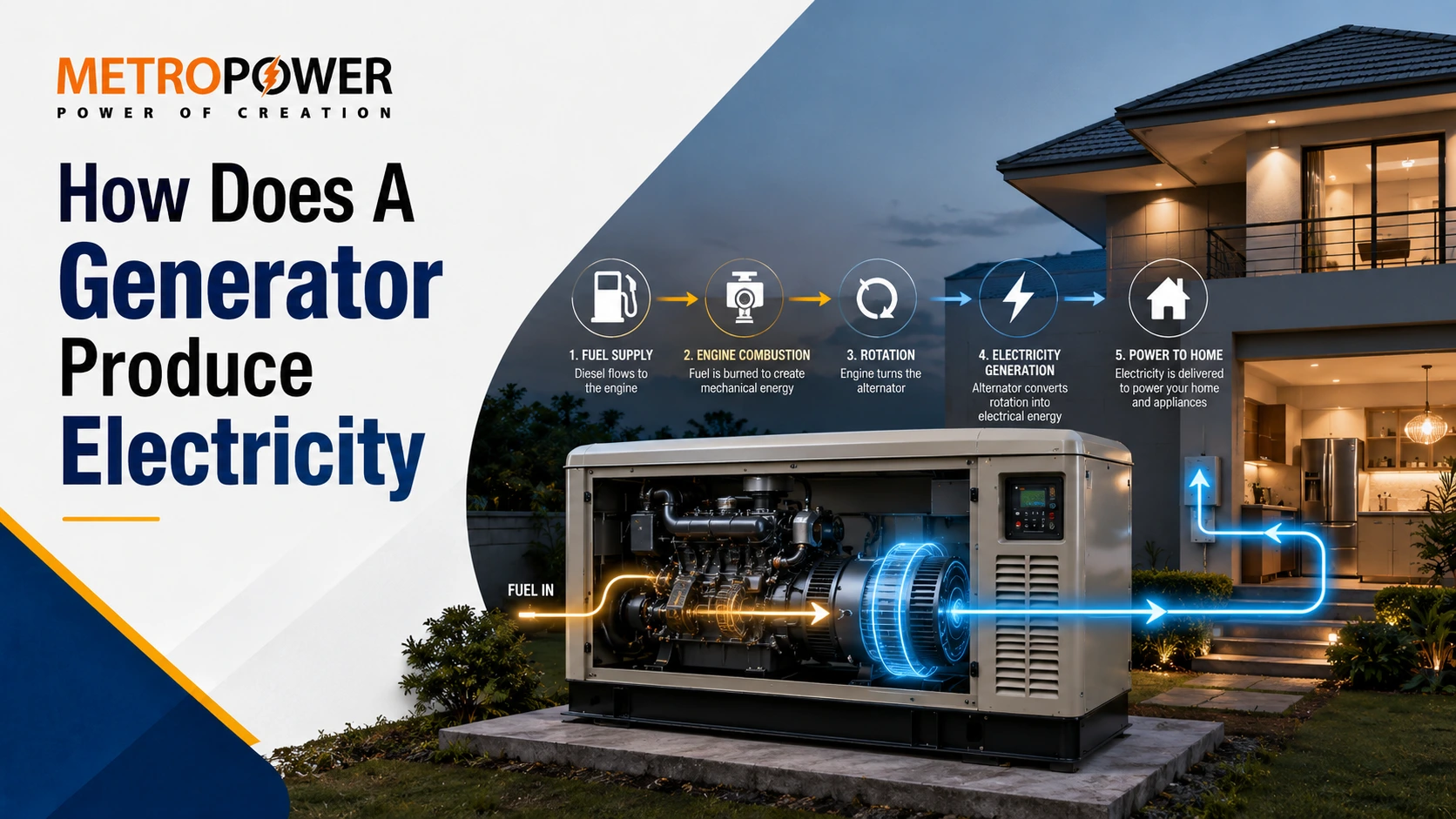
Inside a generator, the engine creates rotation, and the alternator uses electromagnetic induction to produce electricity. Here’s the step-by-step breakdown of how a generator produces electricity:
Step 1: Fuel Powers the Engine
Fuel burns inside the engine and produces mechanical energy. This energy powers the generator’s moving parts.
Step 2: The Engine Creates Rotation
The engine uses this mechanical energy to rotate a shaft. This shaft drives the alternator inside the generator.
Step 3: The Alternator Produces Electricity
The alternator contains magnets and copper conductors. Their movement creates an electrical voltage through electromagnetic induction.
Step 4: Electrical Current Flows
The generated voltage pushes current through the connected circuit. This supplies electricity to appliances and equipment.
Step 5: Voltage Is Regulated
A voltage regulator keeps the electrical output within the required range. This helps provide stable and safe power.
Step 6: The System Monitors Performance
The control system monitors voltage, frequency, temperature, and engine speed. Maintaining the correct engine speed is essential for stable frequency, such as 50 Hz.
What Are the Key Components of a Generator?
Like the human body, a generator contains several components that work together to produce usable electricity. Here are the key components:
▶ Engine
The engine provides mechanical energy. It burns fuel to produce rotational power. Diesel and gasoline engines are common in smaller and medium-sized generators. Larger units often use diesel or natural gas engines.
▶ Alternator
The alternator contains the rotor and stator. The rotating magnetic field in the alternator interacts with the stator windings to generate electricity.
▶ Fuel System
It stores and supplies fuel to the engine. It may include a fuel tank, pump, filter, injector, and fuel lines.
▶ Voltage Regulator
The automatic voltage regulator (AVR) helps maintain a stable output voltage. It adjusts the alternator’s excitation based on electrical conditions.
▶ Cooling System
Generators produce significant heat during operation. The cooling mechanism reduces excess heat from the engine. Larger generators commonly use liquid cooling with a radiator.
▶ Exhaust System
The exhaust system removes combustion gases from the engine. It usually includes an exhaust manifold, piping, and a muffler or silencer. Proper exhaust ventilation is essential, especially for indoor installations.
▶ Control Panel
This allows operators to monitor and control the generator. It can display voltage, current, frequency, engine speed, operating hours, and fault conditions.
▶ Lubrication System
Engine oil reduces friction between moving components. It also helps control heat and protect internal engine parts from excessive wear.
AC Generator vs. DC Generator: Functions & Uses
AC and DC generators both convert mechanical energy into electrical energy. But they produce different types of electrical current, and their mechanisms are different.
AC Generator: Function
An AC generator produces alternating current. The rotor creates a rotating magnetic field inside the stator. This changing magnetic field induces AC voltage in the stator windings. The output voltage and frequency depend on factors such as rotational speed, magnetic field strength, and generator design.
AC Generator: Uses
- Widely used for backup and primary power generation.
- Supplies electricity to homes, offices, factories, hospitals, and commercial buildings.
- In power plants and industrial facilities.
- Applications requiring standard AC power for electrical equipment and distribution systems.
DC Generator: Function
A DC generator produces direct current. It uses electromagnetic induction to generate voltage. A commutator converts the internally generated alternating voltage into a unidirectional DC output. This allows the generator to deliver current that flows in one direction.
DC Generator: Uses
- In applications that require direct current.
- For battery charging, electroplating, welding, and certain industrial systems.
What Are the Top Benefits of a Generator?
Generators can keep essential electrical systems running when the main supply fails. Sometimes they can become a real savior. Uncovering the top benefits of a generator:
✔ Reliable Backup Power
A generator provides electricity when the utility supply becomes unavailable. This is particularly useful during storms, grid failures, maintenance, or unexpected outages.
✔ Keeps Essential Equipment Running
Generators can power important appliances and equipment during an outage. These may include refrigerators, water pumps, security systems, computers, medical equipment, and lighting.
✔ Supports Business Continuity
Power interruptions can stop business operations and cause financial losses. A suitable generator keeps critical systems operating during outages. This helps businesses maintain productivity and reduce downtime. Ensure the generator is installed maintaining the BNBC compliance.
✔ Useful in Remote Locations
Generators can provide electricity where grid power is unavailable. Construction sites, farms, outdoor events, and remote facilities often rely on generators.
✔ Available in Different Sizes
Generators come in many capacities. Small portable models can power selected appliances. Larger systems can supply entire buildings or industrial facilities. This makes it easier to choose a generator based on specific power requirements.
✔ Supports Emergency Situations
Generators are highly effective during emergencies and natural disasters. They can provide temporary power for lighting, communication equipment, pumps, and other essential systems.
✔ Can Run Different Fuel Types
Different generator models use different fuels. Common options include diesel, gasoline, natural gas, and propane. The right fuel depends on the generator, operating environment, fuel availability, and intended use.
Final Words
So, how does a generator produce electricity? The mechanism comes in here. The engine converts fuel energy into mechanical rotation. The alternator then converts that mechanical energy into electrical energy through electromagnetic induction. Components such as the AVR, cooling system, fuel system, and control panel make the generated power stable and usable.
Choosing the correct generator capacity is equally important. An undersized generator can overload, overheat, or fail to start high-demand equipment.
For optimal generator service, ensure your generator is installed by a certified professional like Metro Power Technology. With proper sizing, installation, fuel management, and maintenance, a generator can provide dependable backup power for years.
Top Questions About How a Generator Works
How do you connect a generator to your house?
Connect a generator through a properly installed transfer switch or automatic transfer switch. It prevents dangerous backfeeding into the utility grid. A qualified electrician should handle the installation.
Does a generator create AC or DC?
It depends on the generator design. Most household and commercial generators produce AC electricity. Some generators produce DC or use a rectifier to convert AC into DC.
What produces power on a generator?
The engine provides mechanical power by rotating the alternator’s rotor. Electromagnetic induction then generates electricity in the stator windings.
How do generators work when the power goes out?
A standby generator detects a utility failure and starts automatically through an automatic transfer switch. It transfers the load to the generator and switches back when utility power returns.
How long can a generator run continuously?
A generator can run for 6 hours to several weeks. Runtime depends on fuel capacity, electrical load, engine design, cooling, and manufacturer specifications.
What is the lifespan of a generator?
A generator’s lifespan is typically around 1,000 to 30,000 total running hours. The lifespan depends on its design, workload, maintenance, and operating environment.
Can a generator power a whole house?
Yes, if its capacity meets the home’s electrical demand. Sizing should consider both running watts and starting watts for appliances like AC units and pumps.
Can we use AC on a generator?
Yes, provided the generator has enough capacity for the AC’s running and starting demands. Air-conditioner compressors can require significantly higher starting power.
Which part of a generator produces electricity?
The alternator produces electricity through electromagnetic induction. The rotor’s magnetic field interacts with the stator windings to generate electrical voltage.
Is it safe to run a generator all day?
Yes, generators can run for extended periods when properly designed, ventilated, cooled, fueled, and maintained. But be careful about carbon monoxide buildup.
What fuel do generators use?
Generators commonly use diesel, gasoline, natural gas, or propane. Diesel suits commercial applications. Gasoline, natural gas, and propane are common for portable or standby systems.
0 Comments